Tuesday, June 12, 2012

The ART of YOGA - Coffee in the East Village


ART
Yoga is a beautiful site to behold, with the practitioners twisting and stretching the human body into shapes and line. It is so athletic as to it being considered as a sport for the Summer Olympic Games. Below please view some of the surreal theater that is "Competitive Yoga".


This past weekend was the 9th Annual Bishnu Charan Gosh Cup yoga competition. Yoga as a sport has become a competitive athletic event, demonstrating the beauty of yoga postures as well as the demanding dedication, endurance and unyielding determination of the competitors. Segmented into groups by sex and age, the athletes smoothly go through a set of established poses, pushing human flexibility to its limits, all with a smile on the competitors face. Several Yoga Federations around the world are petitioning to have Yoga Asana brought-in as an official Olympic Sport. Yoga Asana originated in India as a spiritual practice which is also beneficial to the physical and mental health of all devotes. As a fitness program, yoga develops a toned body with added flexibility, it can be practiced by all age groups, children, teens, adults and seniors.


(Source: Information and photos all courtesy of the International Yoga Sports Federation, videos from YouTube.)


FOOD Shopping
Abraco Coffee House
Commune with the poets and playwrights of New York City's East Village.


There is coffee everywhere in Manhattan, but if you are looking for that out of the way place, for a hole-in-the-wall 1950's East Village coffeehouse experience, Abraco is it. It is my recommendation for a cup of Joe with an edge in NYC.


Abraco Espresso Bar with Housemade Semi-Sweets and Savories. 
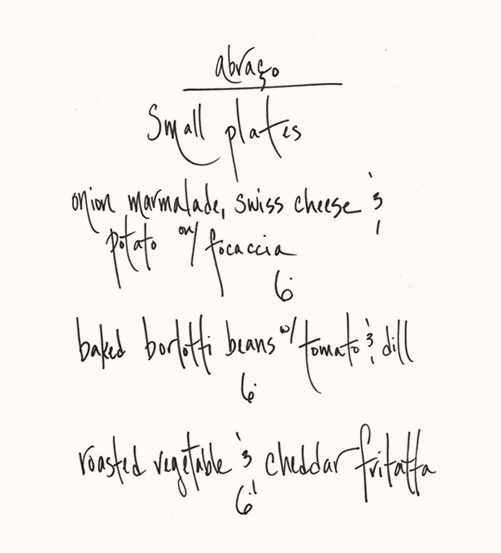
Abraco offers Spanish, Italian and Middle Eastern coffee traditions and treats. You should try the espresso with their olive-oil cake. Or you can order the cured-olive cookies or pain perdu with sweet ricotta, then buy some coffee beans to take home and brew your own expresso. Location: 86 E 7th St.  http://abraconyc.com/#home


Abraco Expresso
East Village
86 East 7th Street, NYC10003
Tuesday thru Saturday 8am -  4pm
Sunday 9 am - 4 pm
Closed Mondays

Take the [6] train to  Astor Place, walk East - Abraco is one block south of St. Marks Place, on 7th St., between 1st & 2nd.

(Information and photos from the Abraco website.)


Until later,
Jack


ARTSnFOOD, is an online publication about the pleasure that the Arts & Food bring into our lives. All rights reserved. Concept & Original Text © Copyright 2012 Jack A. Atkinson under all International intellectual property and copyright laws. Images © individual artists, fabricators, respective owners or assignees.

Monday, June 4, 2012

Albert Bierstadt's: "The Rocky Mountains, Lander's Peak" + Easy Veggie Stew

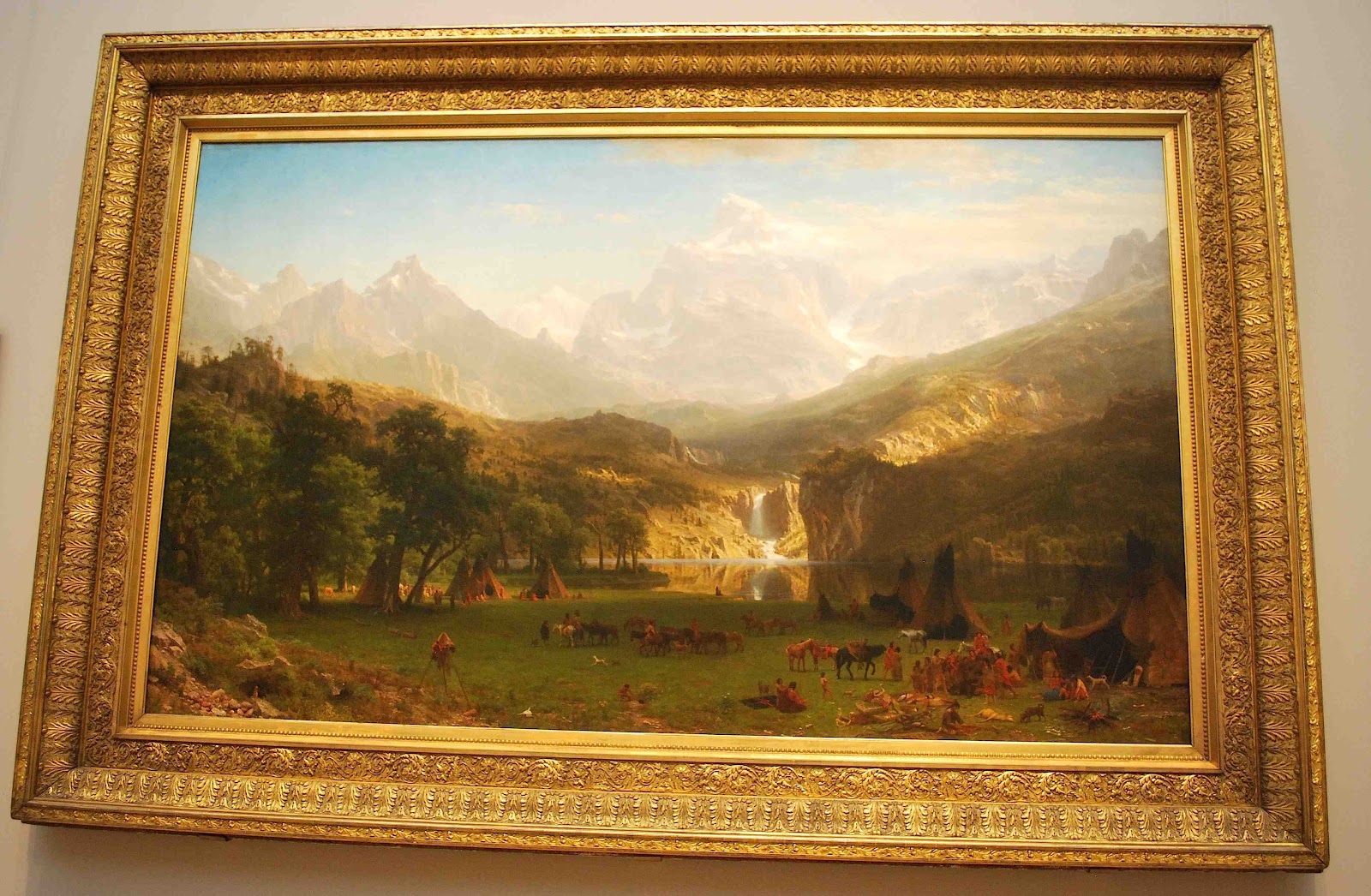
The painting, "The Rocky Mountains, Lander's Peak" by Albert Bierstadt, as it looks in the museum. It was donated to The Metropolitan Museum of art in 1907, where it remains on permanent display.

ART
The Rocky Mountains, Lander's Peak
Albert Bierstadt (1830-1902) 1863 Oil on canvas

The Rocky Mountains, Lander's Peak is a major work by the German-born artist, Albert Bierstadt. It and other paintings by him, helped to shape the visual identity of the American West for most people in the United States and abroad. The work originated from an expedition the artist made in 1859 to the Nebraska Territory (present-day Wyoming and Utah) with Colonel Frederick W. Lander. By the summer of 1859, the party had reached the Wind River Range in the Rocky Mountains, where they found this peak. This painting would help to advertise the western frontier as being available for claim by American settlers, who believed in the doctrine of Manifest Destiny - a belief that Americans were the divinely ordained masters of these lands. Bierstadt titled the painting, and the central mountain pictured, "Lander's Peak" as a tribute to expedition leader, Colonel Lander, who had been recently killed in the U.S. Civil War. The title stuck and the mountain retains the name "Lander's Peak" today. 


A photographic, middle-aged, portrait of Albert Bierstadt.
Bierstadt was one of the first artists with European classical training to capture the beauty of the American West. Bierdstadt came to America with his parents as a 3 year old child when his family settled in Massachusetts. For his formal education, he returned to his native Dusseldorf, Germany to study art under the master landscape painters, Andreas and Oswald Auchenbach at the Dusseldorf Academy of Art. 


Oswald Auchenbach, an instructor at Dusseldorf Academy, was a German landscape painter who taught Bierstadt "how" to make his great paintings of America. (detail of a landscape painting by Oswald shown above)


Bierstadt returned to the US in 1858 and quickly became the official artist on Colonel Lander's expedition to survey the Rocky Mountains. In the rugged landscapes of the Rockies and the big sky of the American West, the artist found the images for which he has become best known. On this first visit West, Bierstadt made studies and notes for his paintings "Morning in the Rocky Mountains" as well as "The Rocky Mountains, Lander's Peak". 


His paintings proved to be an excellent medium for selling stocks and bonds to finance construction of the railroads through the western frontier. Bierstadt accumulated a large bank account, because his beautifully painted and dramatic canvases caught the fancy of the wealthy, the US Government and foreign royalty. Congress approved $20,000, a huge sum at the time, to buy just one Bierstadt. His paintings hang in many museums in the US and around the world.


"Estes Park, Colorado" by Albert Bierstadt [1877] is a featured painting in the Denver Art Museum and is a part of the Denver Public Library's famous "Western Art Collection". 


(A personal note) Having lived much of my life in the Rocky Mountains and the western United States, Bierstadt is an artist I enjoy, because I have experienced the reality of his images of the American West. I always make a special effort to view his paintings, in any collection or museum I visit. 


The 10,456 foot high summit of "Lander's Peak" is located south of Jackson Hole, Wyoming. Bierstadt painted the 10' x 6' oil on canvas painting completely in his studio, from studies made during the survey expedition. The Metropolitan Museum of Art in New York City is the current caretaker of Bierstadt's "Lander's Peak". The work is considered to be Bierstadt's most famous work and arguably his best. He completed it in 1863, exhibited it right away and sold it in 1865 for $25,000 to James McHenry. The artist also thought it was one of his best and later bought the painting back, passing it on to his brother, Edward. The foreground of the painting shows an idyllic American Indian encampment in a tree lined meadow, next to a high altitude lake fed by a snow-melt waterfall.

Let's take a close look at Bierstadt's small genre painting of American Indians, which is a happenstance detail of this painting and overpowered by the mountain scene in the top two-thirds of the composition. The darker bottom third is almost impossible to see in most reproductions, but is wonderfully clear in person and up close. I have made close-up photographs of this painting and lightened the exposure so you can enjoy the full pleasure of this American masterpiece. Some colors have shifted with the brighter exposures.
Let's begin our close observation of "Lander's Peak" by again looking at the full composition, below.
The artwork is large: 10' wide x 6' tall unframed. Albert Bierstadt's "The Rocky Mountains, Lander's Peak" is an oil-on-canvas painted from notes and reference sketches made on location and during Colonel Lander's expedition to the Rocky Mountain west.

(Detail of the American Indian genre painting.) Overview of the middle / right foreground scene.

(Detail) A hunting party shows off their abundant production of elk, antelope, big horn sheep, fox, geese, fish and their big prize, a grizzly bear, where many have gathered to see. The wooden saddles, saddle bags, etc are in a pile on the left.


(Detail) Family scene (to right of the hunting party) shows American Indian clothing, hearth and home.

Papoose next to pictograms painted on the tent, to either record history or predict an abundant hunt.

Fish being smoked / cooked on wooden stakes and Bierstadt's signature and date in orange against earth and green grass. (location: lower right corner)

(Detail) A family near the lake. Father grooms a horse, mother, young child, papoose, a dog and their other grazing horses. Note the close observation of exactly how tee pees are constructed. (location: foreground, above the hunting party).

Men taking the hunting party horses to graze and a young man, center, patiently waits with his bow & arrow as his prey pokes a nose out of a burrow. (location: center foreground)


(location: middle / left foreground) The rest of the tribe gathers and cooks in a second tee pee cluster near some shade trees.

(location: lower / left foreground) Gunnison Prairie Dogs, scrub oak, bristle cone pine, brush and natural grasses on a Rocky Mountian hillside.


The beautifully rendered mountain and it's peak, are the brightest part of the painting, along with the direct sunlight on the rocks near the waterfall. These bright areas constantly draw our eyes up, toward the snowy cap, the hazy blue sky and the clouds. Now take it ALL in and enjoy the whole composition. Bierstadt's "The Rocky Mountains, Lander's Peak" is one of the first great paintings in art history to show the uniqueness of the vast American western landscape and the idyllic, low impact lifestyle of the native American Indians!
To give you a better sense of his work, three more Bierstadt paintings are shown in our postscript section, at the end of this issue.


FOOD
A Fast Veggie Stew


Today's markets offer pre-chopped or pre-sliced produce. Take advantage of this service.


Ingredients
2 tablespoons olive oil, or vegetable oil spray. 
1 medium onion, diced 
1/2 teaspoon sea salt 
1/2 teaspoon ground chipotle pepper 
1 teaspoon dried basil
1 qt. vegetable broth
2 tablespoons dry roux (dry toasted flour in a skillet, until a light brown color.) 
2 tablespoons lime juice, put them in one at a time and make it suit your taste. 


Directions


Put 2 Tbsp. of olive oil or spray to coat your skillet over high heat. Buy a tray of mixed, pre-sliced veggies and throw them into a large skillet with high walls. Add one medium onion, diced. Saute until veggies start to brown, then stir in a box of vegetable broth, 2 tablespoons of dry roux, a sprinkle of dry basil, some salt and ground chipotle pepper to season.  Let the mixture simmer, covered, for 20 minutes and then uncovered for 10 minutes - stirring from time to time. Remove from the heat, stir, taste for seasoning / adjust and add the lime juice.  


Let cool for a few minutes before serving. The hearty broth will thicken as it cools. 


I divide this stew into small batches and freeze it, for a fast, healthy, microwave meal.


Until later,
Jack


POSTSCRIPT:
A few more paintings by Albert Bierstadt.


Mt. Rainier


Approaching Thunderstorm on the Hudson River oil on paper [date unknown]


1890c Mount Sir Donald, Asulkan Glacier oil on canvas 71 x 51 cm

ARTSnFOOD, All rights reserved. Concept & Original Text © Copyright 2012 Jack A. Atkinson under all International intellectual property and copyright laws. Images © individual artists, fabricators, respective owners or assignees.

Wednesday, May 30, 2012

VERGE ART FAIR NYC, May 2012 + Heavenly Louisiana Shrimp Etouffee

"THE USE AND ABUSE OF TECHNOLOGY" an installation/performance piece by Chin Chih Yang
Technology is neutral in itself, but is utilized in art to realize an aesthetic presentation and it becomes a part of the message - while at the same time making a statement about technology's role in how humans communicate, today.

ART
VERGE Art Fair 2012
NYC
Verge is an Art Fair / Co-op Gallery and it did seem to have the widest range of types of art, than any of the other recent fairs. This combination of artists presenting their own work, side-by-side with out-of-town galleries, and at least one international gallery representing their stable of artists, was, for better or worse, quite Bohemian. 
Prints of "Plush Burt"
One bit of advice to any artist, ever exhibiting their work in any country or any venue - presentation counts! Don't expect patrons to pay gallery prices for a work of art you sloppily pin to the wall at an angle, or show in scratched/dented frames, unlabeled and with no price sheet available. Many great artist have messy studios, but if you are one, get a gallery or representative for the business side of art and to oversee your presentation to patrons.


Verge NY, May 2012 had very good, properly presented art and some "OK" art. Although, a few of the "good works" were poorly presented. Bohemia is a big part of the art world and MFA/student work, produced in horrendous studio environments, is often sought after and purchased by the most sophisticated collectors, even when on a studio visit to these messy studios. My observation after having attended every art fair in New York City, looked at every booth and attended many, many, many art openings and gallery exhibition this year, IS: most art, 99.9% of the work in these venues, is pristine, perfectly framed or edged, well lit and cleanly/correctly displayed. A small number of artists at Verge had exhibits which were not presented with a sense of craftmanship. Enough said.


Let's walk through a portion of Verge Art Fair, 2012....


"The 17 years (more or less) in question" Nov. 2011 by Patrick Collier (detail at bottom)


"Fallen Prey to the Notes in the Margins" by Patrick Collier


"Feel the Tread" Feb. 2012 by Patrick Collier


"America - Dirt from all 50 States."

artist information unavailable
"Plush Burt" (anatomically correct)


Bruce R. MacDonald brushes, polishes and grinds stainless steel to create dimensional shapes on these two dimensional surfaces. 


Bruce R. MacDonald

Bruce R. MacDonald's stainless steel works.


artist information unavailable

Susan M. Frame artist and co-director of Jakmel Ekspresyon.
Check out her pencil drawing above and Jakmel Ekspresyon on Facebook.

Jakmel Ekspresyon is an art center in Jakmel, Haiti dedicated to providing a safe space for all people to explore and express their voice.


Fraser Taylor "Figures in a Landscape" Oil Crayon and Gouache on Paper

Fraser Taylor "Figures in a Landscape" Oil Crayon and Gouache on Paper

Fraser Taylor (born 1960) "Schottish Isles" Gouache on Paper

Esmeralda Kosmatopoulos "Palm Authority" Ripstop fabric & audio

"Hot Tramp, I Love You So." pillows

Jansia Szerszynska "Encounter" print series

Kazuko Henmi "No. 8" acrylic on canvas / represented by Gallery Edel
Kuniaki Horii, Gallery Edel director, Osaka, Japan

L'OEUF Reassemble and Rewritten Play

Aveli "Lost in the Crowd"
Nicole Marroquin's baked earth sculptures
artist information unavailable
"Torn" by Elisa Velazquez
"Toe in the Air" Venessa Pooley - bronze

"Pick Me Up" Venessa Pooley - bronze

Perry Ingli's "Tornado" series - 'Abrupt Change' comes out of the clouds, destroys life and property for a short while, then disappears back into the clouds.

Perry Ingli "Tornado" series

"Tornado" series. Perry Ingli is represented by VanBrabson Gallery, Minneapolis, MN 


"Thinking Head"
(front view)
Glynis Owen "Thinking Head"
aluminium (side view)

Writing process as a visual installation


VERGE Art Fair, May 2012 NYC at 159 Bleecker, St.


(All photos were taken with permission of the fair and are © Copyright 2012 Jack A. Atkinson. Images © individual artists, fabricators, respective owners or assignees.)

FOOD
Recently we were invited to stay overnight with relatives of a family friend. To show some of our gratitude for the accommodations and hospitality, we brought some Shrimp Etouffee and rice for dinner the first night. It was a big hit - so here is the recipe.
Louisiana Shrimp Etouffee
Etouffee is pronounced (aye-too-faye) and this dish may be made with crawfish when available. Original Recipe, adapted from many recipes shared with me, by South Louisiana cooks. It is relatively easy to make and will impress everyone at the table.

SHRIMP ETOUFFEE
2 - Green Peppers - diced
1 Tablespoon Olive Oil & 1 stick Butter (adjust to your liking, but this much butter is in most recipes)
3-4 Ribs Celery - thinly sliced
2 - Large Onions - diced
3 - Cloves Garlic - diced
3 - Tablespoons Dry Roux (white flour made into a dry roux = heat some flour in a pot, stirring constantly, until it is the color of cafe-au-lait) or use Tony Chachere's Creole - Instant Roux Mix.
2 lbs Uncooked Shrimp in shells (thawed or fresh)
1/2 cup Water, add more - sparingly - as needed
1 small can Tomato Paste (6 oz)
1 Lemon - juiced
2 teaspoons dried Basil
2 Green Onions (top greens only) chopped
1/4 teaspoon Salt (or to taste)
1-2 teaspoons Louisiana Style Cajun Seasoning (available in most grocery's spice sections)

SHRIMP ETOUFFEE DIRECTIONS
- Prep vegetables.
- Coat a large, deep-walled skillet with 1 tablespoon olive oil + 1/2 stick of butter. 
- Heat on HIGH heat. When butter is melted add the Vegetables a third at a time and stir to saute. With-in one minute you should have all veggies in the skillet cooking. Stir often and cook until soft and the onions are transparent.
- Add 1/2 cup water, basil, Cajun spices, salt and tomato paste. Stir to mix and dissolve paste. 
- Add shrimp and remaining butter (chopped into 1/2" cubes and spread around over the shrimp) Make certain all shrimp are in the liquid - Cover and cook until shrimp are entirely pink. Flipping the shrimp from time to time to make certain they cook on both sides. (Do not over-cook shrimp.)
- Using tongs and a strainer over the skillet, remove the shrimp and shake off excess sauce, then place in the strainer to drain back into the pot. Then place drained shrimp in a bowl to cool.
 (This can be done in stages until all shrimp are removed. After the shrimp 
 have cooled, peel and discard the shells and tails. Cut all shrimp into two 
 pieces and reserve - add shrimp back into the sauce, just before serving.)
- Add the dry roux, stir-in and continue simmering the sauce for at least 10 more minutes after shrimp have been removed. Add small amounts of water if the sauce gets too dry. If you make it too runny, you can cook it longer to reduce. Consistency of the sauce should be the same as a thick stew.

Finally, taste and adjust the seasoning (add salt or more cajun spices), stir shrimp back in, add lemon juice, add green onion tops, mix well and - Serve!

RICE

2 cups Jasmine Rice
4 cups Water
2 teaspoons Salt

RICE DIRECTIONS
In a large pot -
Bring water and salt to a boil. 
Add rice and bring back to a boil.
Cover
Turn down stovetop heat to simmer and cook untouched, without taking off the lid or stirring, for 15 minutes.
Check for doneness (no crunch)
Remove from heat and fluff.
Keep covered until ready to serve.

SERVING INSTRUCTIONS
Mound a generous amount of rice in the center of a plate or bowl
and spoon the Etouffee sauce on top, leaving some white rice showing on the sides.
Makes 6 - 8 generous servings.

Please use my blog: ARTSnFOOD.blogspot.com to pass this recipe along to others - It is an original recipe and I would appreciate it. Just copy and forward the link below. 

Until later,
Jack
All photos were taken with permission and are © Copyright 2012 Jack A. Atkinson. ARTSnFOOD, is an online publication. All rights reserved. Concept & Original Text © Copyright 2012 Jack A. Atkinson under all International intellectual property and copyright laws. Images © individual artists, fabricators, respective owners or assignees.